
Welcome to The Casa Garden, a new series on the Casa Blog. Each month we will share what is happening in the garden, what children can help with, and why this work matters so much in a Montessori school. Gardening is one of the oldest parts of Montessori education. Children water, dig, sow, wait and harvest, and along the way they learn to care for something living.
Here in Central Texas, winter is not the end of the garden. It is the start of a new one. The heat is gone, the leaves are falling, and the cool-season vegetables are just getting going.
- In the garden now
- What to plant now
- Before a frost
- Leaves and compost
- Planning for spring
- Why gardening is Montessori
- Try it at home
- Garden words in Spanish
- Help the Casa garden
What is happening in the garden now
In November and December, the summer plants are finished and the cool-season garden takes over. Leafy greens, root vegetables and hardy herbs grow well in our mild winter days. Last March, our children harvested chard, bok choy and lettuce, the kind of greens that grow through the cool months. At the same time, trees are dropping their leaves, which is one of the best gifts a garden can get.
The first frost is close. Frost dates change from one neighborhood to the next, and these are averages, so a cold night can come earlier or later.
| Area | Average first frost | Average last frost |
|---|---|---|
| Williamson County | November 27 | March 4 |
| Northwest Austin (Great Hills) | November 27 | February 25 |
| Central Austin (Camp Mabry) | December 1 | February 20 |
Sources: Williamson County Vegetable Planting Guide, 2026 (Texas Master Gardeners and AgriLife Extension); AgriLife Vegetable Garden Planting Guide, 2025 (Austin).
What to plant now, for a spring harvest
In Williamson County, these can still go in now. Most grow slowly through the winter and are ready to pick from late winter into spring. Hardy greens may need a cover on the coldest nights. For every month of the year, see The Casa Garden Almanac.
Sow seeds or set out small plants through December. Children can pick outer leaves a few at a time.
A hardy green that handles cool nights. Sow seeds or plant transplants through December.
Big seeds, small hands, quick results. Some are ready to pull in about a month.
Bok choy and its cousins grow well all winter. Our children harvested big ones last spring.
One of the toughest winter greens. Plant by the end of November.
Plant cloves pointy end up by the end of November. They grow slowly all winter.
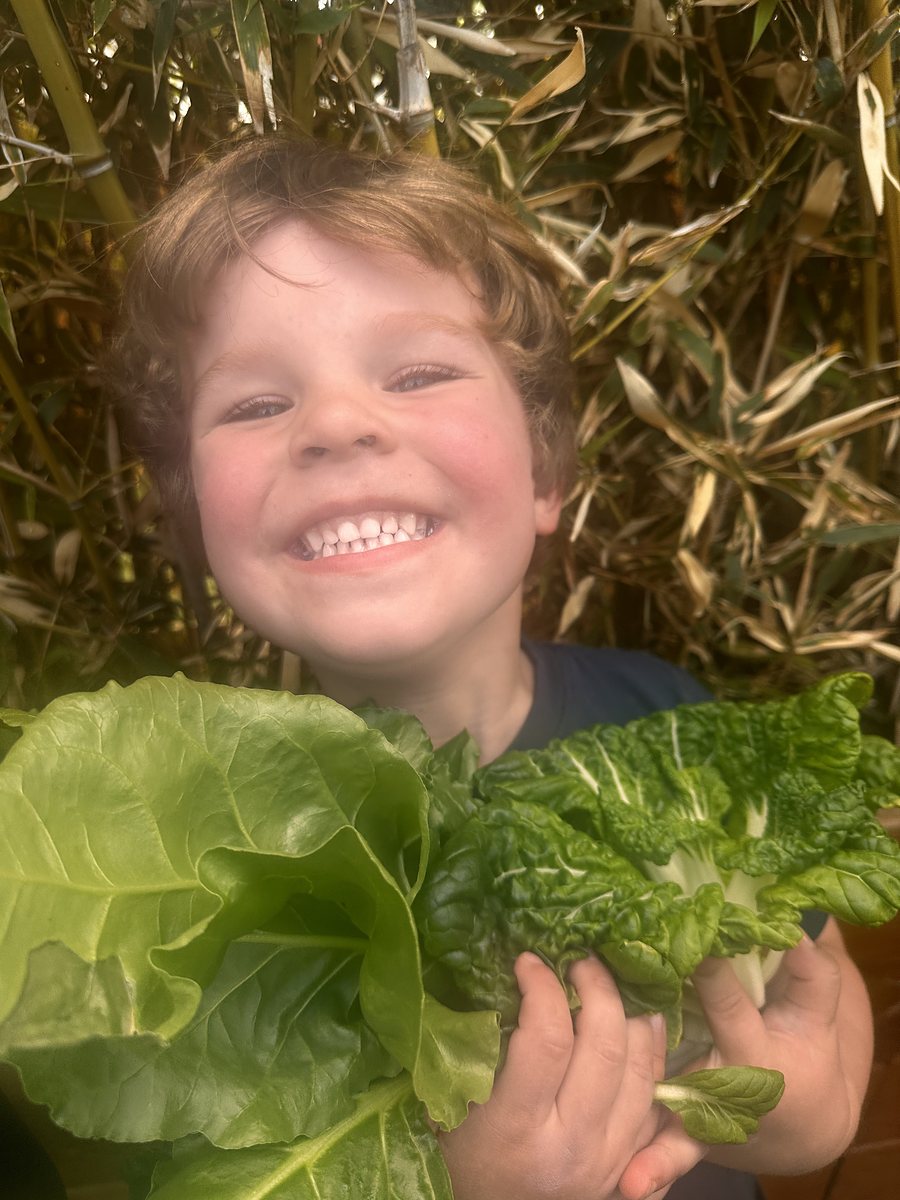
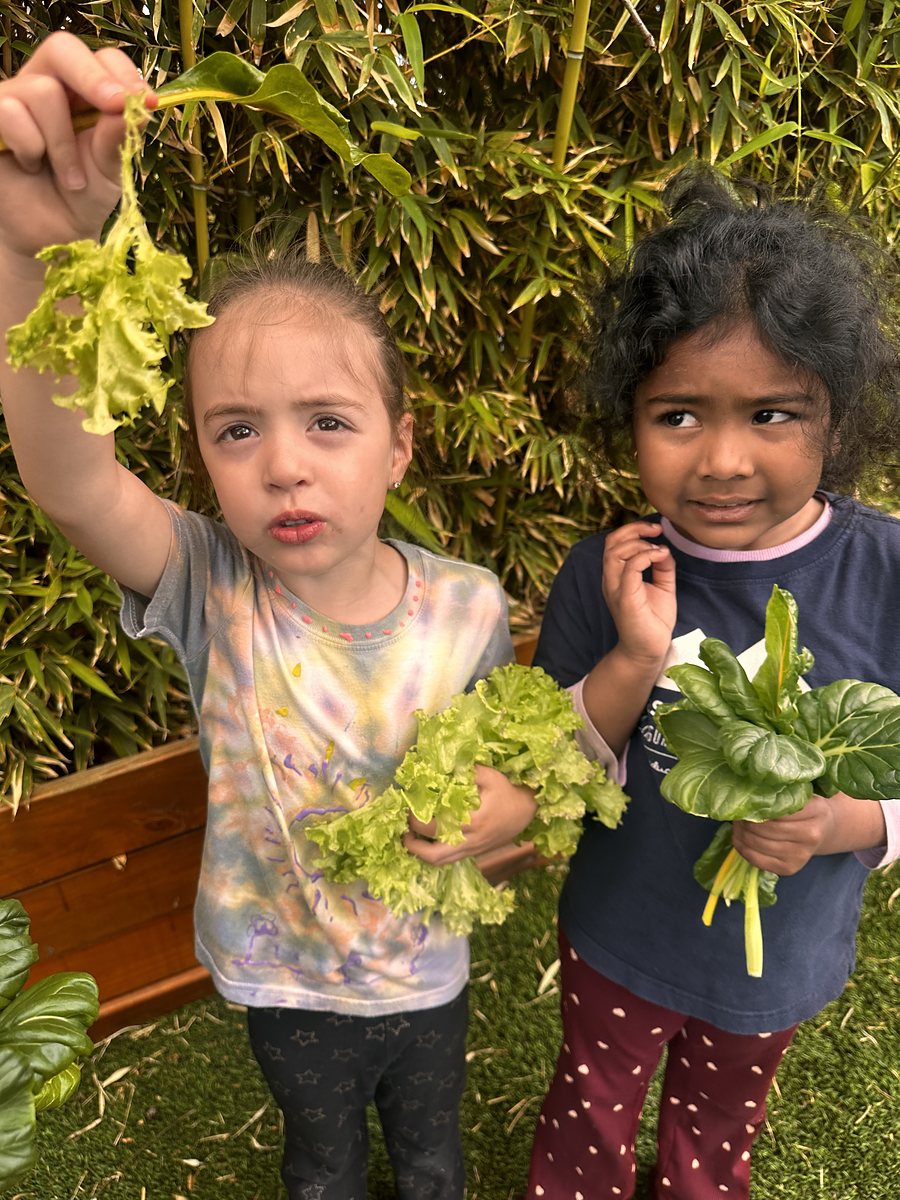
Harvest day in the Casa garden this past March: chard, lettuce and bok choy.
Taking care of vegetables before a frost
A few simple steps help winter vegetables through a cold night.
- Watch the forecast. When the low is expected to drop below 28°F, cover tender plants with frost cloth (row cover). Secure the edges with rocks or pins so cold air can't sneak under. Take the cover off when it warms up.
- Check the soil before you water. Keep beds moist but not soggy. Push a finger into the soil. If it is dry, water.
- Feed the vegetables. AgriLife suggests feeding winter vegetables every two weeks with a gentle fertilizer like fish emulsion.
- Clean up. Pull small weeds while they are young, and remove annual plants once frost has killed them.
- Care for the tools. Clean and oil garden tools so they are ready for spring. Children can help wipe and hang them in their place.
Children can help: hold the corners of the frost cloth and set rocks along the edges, push a finger into the soil to check if it needs water, and wipe each tool with a cloth before hanging it up.
Leaves, mulch and compost: caring for the earth
Fallen leaves are not trash. In a garden they become mulch, compost and, in time, rich soil. This is recycling that children can see and touch.
- Save your leaves. Rake them into a pile or bag. Shredded leaves (a mulching mower helps) break down faster.
- Tuck in the beds. Spread leaves and compost over empty vegetable beds, and add a fresh layer of mulch around your plants. It keeps the soil warmer and wetter.
- Build a compost pile. Mix "browns" (dry leaves, shredded newspaper, cardboard) with "greens" (vegetable and fruit scraps, fresh grass clippings, coffee grounds).
- Keep it damp, like a wrung-out sponge. A squeezed handful should give only a few drops of water. Turn the pile on mild days so air can reach the middle.
- Know what stays out. Keep meat, dairy and oily food out of a backyard pile. If you live in Austin and have a green city compost cart, those scraps can go there instead.
Children can help: carry leaves to the pile in a small basket, crunch dry leaves with their hands, carry the kitchen scrap bowl to the compost, and sprinkle water on the pile with a small watering can.
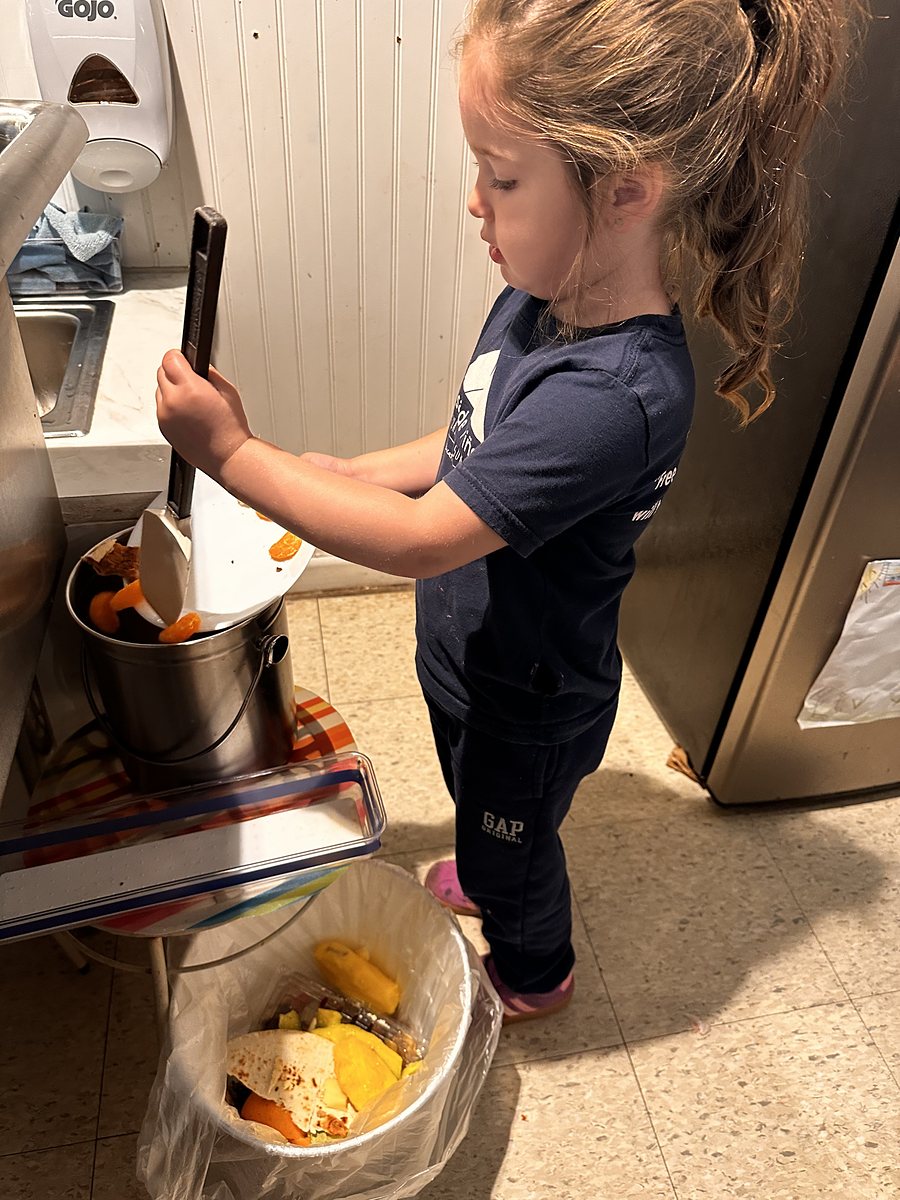
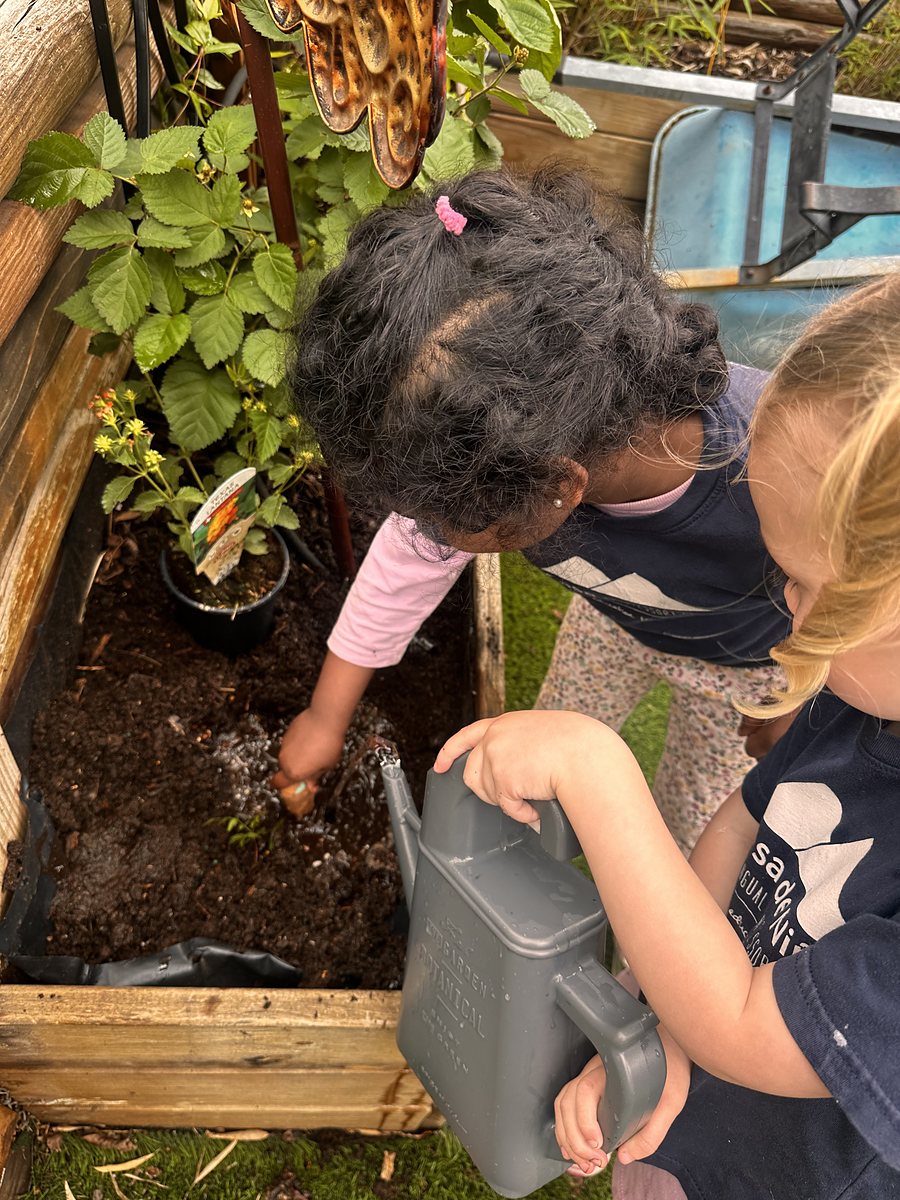
At Casa: food scraps go to the compost, and children water and tend the garden beds.
Planning for spring
Some of the spring garden starts in winter. Broccoli, cabbage and cauliflower are best planted in fall or late winter, not in December. In December, you can start seeds of broccoli, cauliflower, kale, mustard, collards and cabbage in trays, then move the young plants to the garden from mid-January. It is also time to order seed potatoes for planting in February. Month-by-month planting times are in The Casa Garden Almanac. A seed catalog is a lovely thing to look through with a child on a cold afternoon.
Why gardening is part of Montessori
In Montessori, caring for plants is part of care of the environment, the practical life work where children look after the spaces they share. Watering, sweeping up soil, carrying a basket and putting tools back help children build focus, coordination and independence. They also learn that they belong to a community, and that the world around them needs their care.
"The children are initiated into the virtue of patience and into confident expectation."
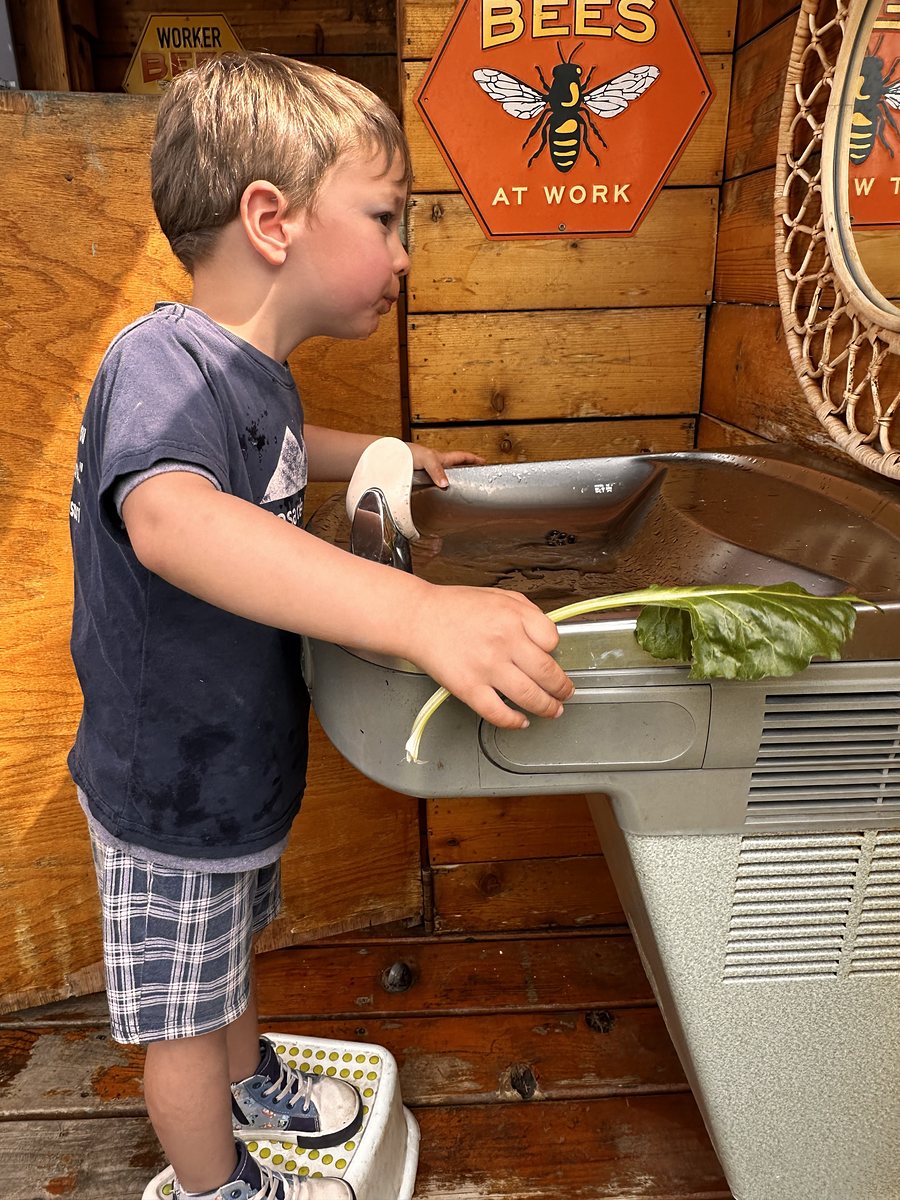
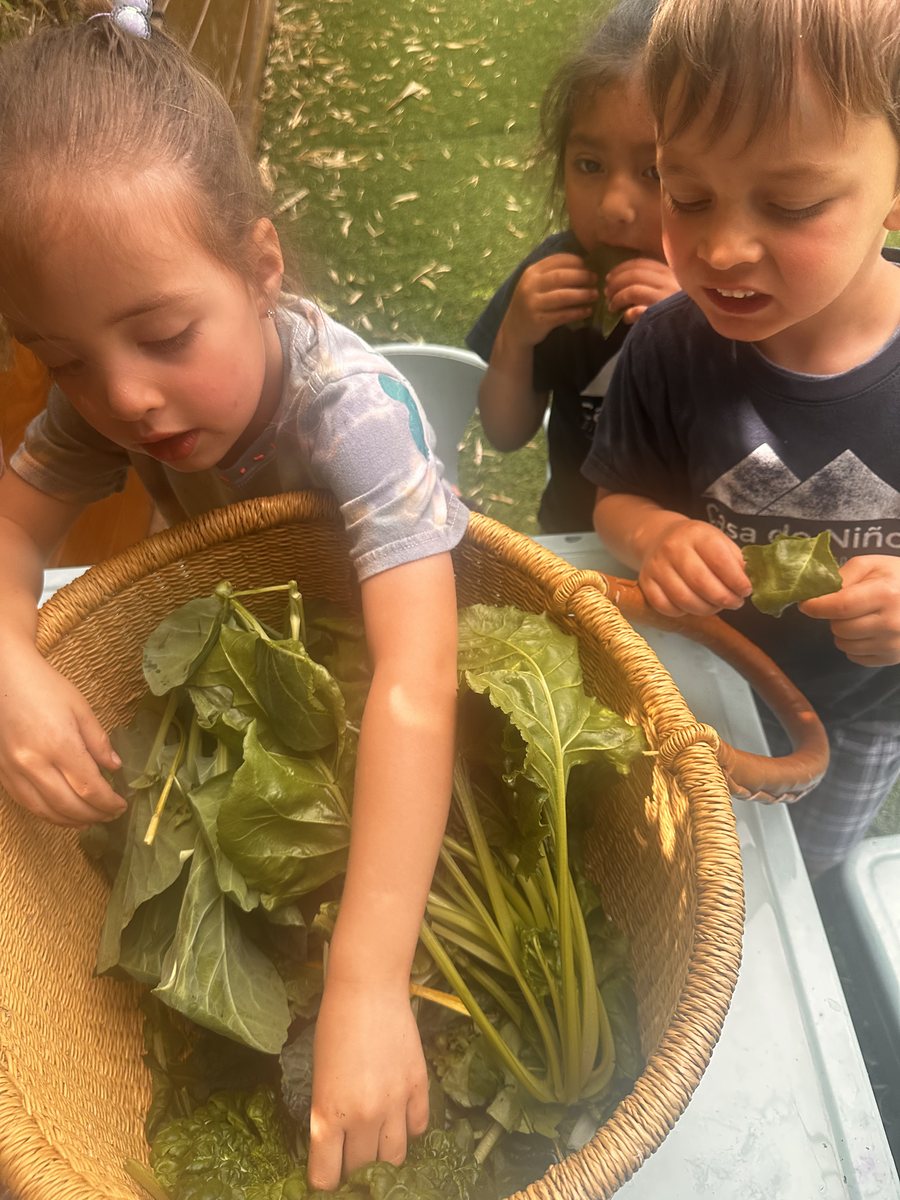
From the garden to the table: children wash the greens they picked.
A garden teaches what no worksheet can. A seed goes in today, and nothing seems to happen for weeks. Then a sprout appears. Children learn to wait, to plan ahead, and to notice small changes. Dr. Montessori wrote that children who care for plants never forget to water them. When a child knows a plant depends on them, they remember.
Composting and recycling grow from the same idea. When children see an apple core become soil, and that soil feed next year's lettuce, they begin to understand that nothing in nature is wasted, and that they can help.
Try it at home
You don't need a big yard. A pot on a balcony is enough.
- Plant a pot of radishes or lettuce together. Let your child fill the pot, press in the seeds and water with a small watering can.
- Give your child a real job. Watering the same plant every day is a perfect first responsibility.
- Start a leaf pile. Rake together and talk about where the leaves go and what they become.
- Save kitchen scraps. Keep a small bowl on the counter for peels and coffee grounds. Your child can carry it to the compost or the green cart.
- Sort the recycling together. Paper, cans and bottles each have their place, just like materials on a classroom shelf.
- Harvest and eat. Children are often more willing to try a vegetable they grew themselves.
- Find more ideas. Every month has its own list of gardening activities for toddlers and preschoolers in The Casa Garden Almanac, and all our activities are gathered in Montessori activities for children.
- Use child-sized tools. A small trowel, gloves and watering can let your child do the work without help.
Garden words in English and Spanish
Say the words as you work, in one language or both. Children learn vocabulary best when their hands are busy with the real thing.
- garden · el jardín / el huerto
- seed · la semilla
- soil · la tierra
- leaves · las hojas
- compost · la composta
- mulch · el mantillo
- worm · la lombriz
- watering can · la regadera
- trowel · la palita
- rake · el rastrillo
- gloves · los guantes
- frost · la helada
- to plant · sembrar
- to water · regar
- to harvest · cosechar
- to grow · crecer
Help grow the Casa garden
Our garden grows with help from Casa families. If you would like to give some of your time, plants, seeds, soil, compost or garden tools, or lend a hand with gardening, it is always appreciated. Let your child's guide or the front office know, or contact us.
From The Casa Shop
Casa clothing and rain gear for muddy garden days, and nap mats for after.
Come see the Casa garden
Visit our classrooms and garden and see how children care for their environment every day.
Book a Tuesday tourSources
- Texas A&M AgriLife Extension, Travis County, “December Gardening Checklist for Austin and Central Texas”
https://travis-tx.tamu.edu/about-2/horticulture/monthly-gardening-calendar-for-austin-area/december-gardening-checklist-for-austin-and-central-texas - Texas A&M AgriLife Extension, Travis County, November gardening checklist for the Austin area
https://travis-tx.tamu.edu/?p=11097 - Texas Master Gardeners, Williamson County, Williamson County Vegetable Planting Guide 2026
https://txmg.org/williamson/files/WilliamsonCountyVegetablePlantingGuide2026.pdf - Patty G. Leander, Vegetable Garden Planting Guide, Texas A&M AgriLife Extension, January 2025 (Travis County frost dates)
https://agrilifeextension.tamu.edu/vegetablegardenplantingguide-jan2025-english - Gabe Saldana, “Home composting good for garden, environment,” AgriLife Today, Texas A&M AgriLife, July 7, 2020
https://agrilifetoday.tamu.edu/?p=308899 - City of Austin, Austin Resource Recovery, “Curbside Composting Guide”
https://www.austintexas.gov/resource-recovery/curbside-composting-guide - Maria Montessori, The Montessori Method (1912), Chapter X, “Nature in Education: Agricultural Labour: Culture of Plants and Animals” (University of Pennsylvania digital library)
https://digital.library.upenn.edu/women/montessori/method/method-X.html - Association Montessori Internationale (AMI), glossary: “Care of the Environment”
https://archives.montessori-ami.org/help/glossary/care-environment
See you in the garden,
Admin
Casa de Niños Bilingual Montessori School
For more tips, follow @casadeninosbilingualmontessori
← Back to the Casa Blog